
Hotel website design that wins direct bookings
Custom, senior-engineered property websites with availability search on the first screen, a booking path short enough to finish, room pages that rank on their own, and photography that actually loads on a phone.

Every OTA booking costs you commission you never had to pay
A guest arrives with dates already in mind. They want to check availability, see the actual room, confirm parking and check-in, and find the cancellation policy. If any of that takes hunting, they go back to the booking site where all of it sits in one predictable layout - and you pay for the privilege. Winning the direct booking means matching that convenience, then offering something the OTA cannot.
Parity
comes first: if the OTA is cheaper, no amount of design wins the direct booking
Heavy
uncompressed imagery is the usual reason hotel sites load slowly on a phone
Dates
are what a guest arrives with, so availability search belongs on the first screen
This is why we audit rate parity before quoting a build. Fixing the website while the OTA undercuts you is money spent on a race you have already lost.
The features that turn a search into a direct booking
Every element exists to move a guest from a search to a confirmed direct booking rather than an OTA reservation.
Availability search on the first screen
A date picker above the fold, not behind a menu. Guests arrive with dates, and the site that asks for them immediately keeps the ones that would otherwise bounce back to a booking site.
A booking engine that stays yours
Integrated so it looks and behaves like your property, tested on a real phone. A jump to an unbranded third-party page mid-transaction is where most direct bookings are lost.
A page per room type
Real photography, honest dimensions, and specific amenities for each room - which ranks for the searches guests actually run and answers the question a combined rooms page never does.
Image delivery that does not sink the page
Modern formats, properly compressed, sized to the layout. Photography sells the property, so the answer is never fewer images - it is images that finish loading on cellular data.
A visible book-direct advantage
A best-rate guarantee, an arrival perk, or a direct-only package, stated unmissably. This is the whole argument for not using an OTA, and it has to be true before it is worth making.
Area content that reaches guests earlier
Guides to attractions, transport, and getting here. These capture planning-stage searches that booking sites never target, reaching guests before they have chosen where to book.
Get found where guests actually search
Local and planning-stage search
You will not outrank the OTAs on high-volume booking terms, and chasing that wastes budget. What you can own is what they cover badly: your own property name, room-type specifics, and the planning-stage questions - getting here, what is nearby, whether there is parking. A complete Google Business Profile, Hotel schema with amenities, and genuine area guides are what move those.
Visibility in ChatGPT and AI Overviews
Travelers now ask assistants for "a hotel near [attraction] with parking and free cancellation." Being cited depends on structured, factual content a machine can read - Hotel schema, explicit amenities, real policies, correct check-in times. Atmospheric copy about timeless elegance gives an assistant nothing to quote.
Both channels reward the same thing: specific, verifiable facts about the property, stated plainly.
Why a custom-built hotel website wins
Hotel template platforms
Quick to launch and often bundled with a booking engine, but you get fixed layouts, an off-brand booking flow, image handling that ignores compression entirely, and a site that looks like every other property on the platform. Area content is rarely supported at all.
Our custom builds
Built around your property, your room types, and your direct-booking strategy. Fast image delivery, an on-brand booking path, room pages that each rank, and area content that reaches guests earlier. You own design, content, and domain outright.
Every commission-free booking compounds. Owning the asset that generates them is the cheapest inventory you will ever buy.
Tailored to your property
A boutique city hotel is a different website from a resort with packages, and neither is a small group with shared branding.
Boutique and independent hotels
Character sells. Photography and a short booking path do most of the work.
Resorts
Packages, seasons, and multiple amenities. Content depth and rate flexibility matter.
Bed and breakfasts
Personality and a handful of rooms. Simplicity plus honest policies converts best.
Serviced apartments
Longer stays, different search intent. Rates and amenities need clearer explanation.
Business and city hotels
Location, transport, and speed of booking. Meeting rooms deserve their own path.
Venues and weddings
Inquiry-led rather than booking-led, with pages built to capture real detail.
Hostels and budget
Price and location lead. Fast pages and honest imagery beat production value.
Small hotel groups
Property pages that rank individually under a shared brand, without duplication.
A clear process - from parity audit to direct bookings
Rate parity and funnel audit
We check your direct rates against the OTA listings first, then map where guests currently drop out of the booking path. Parity problems get named before anything else is quoted.
Search and competitor analysis
Which properties hold the searches you can realistically win, and which planning-stage and area terms nobody local has claimed.
Structure and content plan
Room-type architecture, area and attraction guides worth writing, package pages, and an inquiry path for events or meetings.
Design and build
Custom design built by senior engineers, with an image pipeline that keeps an image-heavy site genuinely fast on a phone.
Booking engine and profile work
Booking engine integrated to stay on-brand and tested end to end, Google Business Profile completed, Hotel schema with amenities and policies.
Launch and measurement
Redirects mapped, rankings monitored through launch, analytics wired to completed direct bookings rather than pageviews.
Clear pricing for hotels
Fixed scope, milestone billing, no hourly surprises. For context, custom hotel websites across the market typically run $3,000-$40,000+; most of our properties land in the ranges below.
Starter property site
2-3 weeks
From $2.5k
For a single small property that needs a fast, credible site with availability search and honest room pages.
- Custom design, up to 6 pages
- Availability search above the fold
- Up to 4 room-type pages
- Booking engine integration
- Google Business Profile setup
Growth site + direct bookings
3-5 weeks
From $6k
For properties competing hard for direct bookings, with packages, area content, and an events or meetings path.
- Everything in Starter
- A page per room type
- Area and attraction guides
- Packages and direct-only offers
- Events or meetings inquiry path
- Image pipeline and speed work
Direct booking partner
Monthly after launch
From $1.5k/mo
Ongoing content, local SEO, and conversion work for properties treating direct bookings as a channel to grow.
- Monthly area and seasonal content
- Local SEO and listing maintenance
- Conversion testing on the booking path
- Image and performance monitoring
- Monthly reporting on direct bookings
What affects the price
- Number of room types needing their own page
- Which booking engine needs integrating and how deeply
- Whether new photography is needed
- Volume of area and attraction content
- Events, meetings, or wedding inquiry requirements
- Whether ongoing content and local SEO are included
Not sure what you need? Estimate your project cost or send us your details.
What the best hotel websites do differently
Look through enough hotel website examples and the strong ones share six habits. None is about having a bigger photography budget.
Their direct rate is genuinely competitive
The foundation. If a guest finds the room cheaper on an OTA, everything else on this list is decoration.
Availability search is on the first screen
Guests arrive with dates. Asking for them immediately keeps the ones who would otherwise bounce back to a booking site.
The booking path never leaves the brand
An off-brand redirect mid-transaction reads as a handoff to someone else, and guests abandon at exactly that point.
Every room type has its own page
Real photography, honest dimensions, specific amenities. It ranks separately and it answers the question guests actually have.
The cancellation policy is easy to find
Before booking, not after. A hidden policy is one of the leading causes of abandoned hotel bookings.
The images are beautiful and they load
Modern formats, compressed, sized to the layout. In the web's slowest category, that combination is a competitive advantage.
Already have a website? You may not need to start over
A refresh
If the site works but feels dated, a targeted refresh is quick and low-risk. Availability search moved up, room pages split out, images compressed properly, and the book-direct advantage made visible - keeping the structure Google already knows.
A full redesign
When the site cannot be made fast, or the booking flow cannot be brought on-brand, a rebuild pays for itself. We map redirects, keep the URLs and content that perform, and watch analytics through launch.
We assess your current site honestly and recommend the smaller path when it is the right one.
How our website redesigns workStarting from scratch? Small business web design
A hotel website is never "finished"
Launch is the starting line. Seasons turn, rates move, packages change, and rate parity needs watching continuously rather than once. We keep the site fast and secure, and track what matters: where direct bookings come from, which room and area pages earn them, and where guests still abandon the booking path.
Then we publish the seasonal and area content that reaches guests at the planning stage, and sharpen the steps where bookings still leak. Month after month, a larger share of your bookings arrives commission-free.
What to look for in a hotel web design agency
Hospitality web design is full of bundled booking engines and atmospheric portfolios. Here is how to tell a real partner from a rented template.
They ask about rate parity before design
A partner who never mentions your OTA rates does not understand where direct bookings are actually won or lost.
They treat images as an engineering problem
Ask how they handle compression, formats, and sizing. In the web's slowest category, an unclear answer is a slow site.
The booking engine stays on-brand
Check where the guest ends up mid-booking. An unbranded redirect is where most abandonment happens.
You own the site outright
Design, content, domain, and code. If leaving your agency means losing the website, you were renting all along.
They measure completed bookings
Traffic is a vanity number for a property. Ask what they report on, and check that direct bookings appear in the answer.
Senior engineers touch the build
Image delivery, booking-engine reliability, and mobile performance are engineering problems, not design deliverables.
Conversion is an engineering problem - and we treat it like one
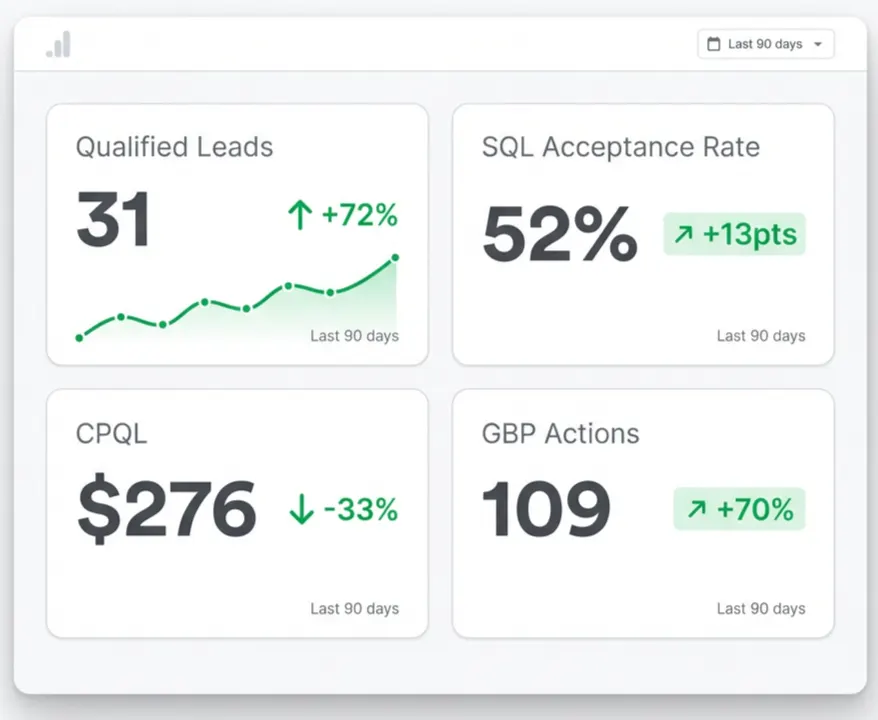
One SaaS product went from 18% to 42% activation once we took the friction out of its signup flow. The same discipline turns a hotel site visitor into a completed direct booking. See how we find and fix the path to conversion.
Hotel website questions, answered
How much does hotel website design cost?
Across the market, custom hotel websites typically run $3,000 to $40,000 or more, driven mostly by the number of room types, how deeply the booking engine integrates, and how much area content is included. Our starter builds begin at $2,500 for a small single property; most properties competing hard for direct bookings land in the $6,000 to $15,000 range. Ongoing content and local SEO is separate, from $1,500 a month.
How do we win more direct bookings instead of OTA reservations?
Start with rate parity, because if a guest finds the room cheaper on a booking site nothing else matters. Then put availability search on the first screen, keep the booking path to three steps or fewer, keep the booking engine on-brand, and give guests a concrete direct-only advantage - a best-rate guarantee, an arrival perk, or a package the OTAs cannot list.
Can our website outrank Booking.com or Expedia?
Not on high-volume booking terms, and any agency promising that is not being straight with you. What you can win is your own property name, room-type specifics, and planning-stage searches about the area, transport, and amenities. Those reach guests earlier and cost nothing in commission, so it is the better fight anyway.
Why is our hotel website so slow?
Almost certainly the photography. Hotel sites are the most image-heavy category on the web and most ship uncompressed originals many times larger than the layout needs. The fix is not fewer images - they are what sells the property - but modern formats, proper compression, and serving each image at the size it is actually displayed.
Do you integrate with our existing booking engine?
Yes. We work with whichever engine or channel manager you already run and focus on integrating it so it stays on-brand and works properly on a phone, since that is where abandonment happens. If the engine itself is the bottleneck we will say so plainly, but switching is your decision.
Is area and attraction content actually worth writing?
It is one of the few places a property reliably outranks the OTAs, because booking sites do not target planning-stage searches. Guides to getting here, what is nearby, and parking reach guests before they have decided where to book, which is considerably earlier than a rate comparison.
How long does a hotel website take to build?
A small single-property starter site takes two to three weeks. A growth site with per-room pages, area content, packages, and an events path takes three to five weeks. Migrating substantial existing content and rankings adds time, because mapping redirects properly protects the traffic you already have.
Do you work with small hotel groups?
Yes. The main risk is property pages that are near-identical templates under a shared brand, which is what most platforms produce. We design property pages that can each rank on their own name, rooms, and location while still reading as one group.
Ready to build your next product?
Tell us what you're building. A senior engineer will help you scope it, plan it, and get it built fast, on a foundation that's ready for real users.