
Real estate websites that win listings, not just page views
Custom, senior-engineered websites for agents, teams, and brokerages - with listings that load fast, neighborhood pages that actually rank, and separate paths for the buyer and the seller you want.

Portals own the listings. Agents win on everything else
You will not outrank the big portals for property searches, and chasing that is how most agent websites waste their budget. What you can own is the ground the portals cover badly: local expertise, seller valuation intent, neighborhood knowledge, and your own name. That is where the listings actually come from.
Sellers
are the valuable search intent - and the portals convert them poorly
Local
neighborhood knowledge is the one thing a national portal cannot replicate
Referral
traffic still lands on your site to be validated before anyone calls
The job of an agent website is not to be a smaller portal. It is to prove you know this market better than anyone, and to make the valuation request effortless.
The features that turn a search into a listing
Every element exists to move a buyer or a seller from a search to a conversation with you rather than a portal.
Listings that load fast
IDX or feed-driven listings that stay quick and indexable, rather than an embedded widget that adds three seconds and shows Google nothing. Search, filter, and detail pages built to be crawled.
Seller and valuation funnels
A dedicated path for "what is my home worth" - the highest-value intent in the whole market. A valuation request that asks enough to be useful without scaring the seller off.
Neighborhood pages with real substance
Genuine guides to the areas you work: schools, transport, price trends, what it is actually like to live there. This is the content portals do badly and where an agent can outrank them.
Buyer paths that segment themselves
First-time buyers, investors, and downsizers want different things. Separate paths mean each one reaches content that speaks to them rather than a single generic funnel.
Agent and team credibility
Real bios, transaction history where disclosure rules allow, verified reviews, and market credentials placed next to the decision. Most referral traffic arrives specifically to validate a name.
CRM and follow-up integration
Inquiries into whichever CRM you already run, with the source attached so you know which page earned the lead. A form that dead-ends in an inbox is a lost listing.
Get found where clients actually search
Local and neighborhood search
Rather than competing with portals on property listings, we target what they cover thinly: neighborhood guides, seller intent, market updates, and "[area] real estate agent" searches. A complete Google Business Profile, consistent citations, steady reviews, and genuinely useful local content are what move these. Real estate agent SEO is largely a content and authority game, not a technical one.
Visibility in ChatGPT and AI Overviews
Buyers and sellers now ask assistants things like "which agent knows the [area] market well" or "is now a good time to sell in [city]." Being cited depends on structured, factual, genuinely local content plus the off-site reputation signals these engines trust. Generic market platitudes give an assistant nothing to quote.
Both channels reward the same thing: specific local knowledge, written honestly and structured clearly.
Why a custom-built real estate website wins
Agent template platforms
Cheap monthly and quick to launch, but you get a site identical to every other agent on the platform, slow embedded listing widgets, no real neighborhood content, and capped SEO control. Your leads often flow through the vendor, and leaving means losing the site.
Our custom builds
Built around your market, your segments, and the listings you want. Fast, indexable listing pages; neighborhood content with genuine substance; leads straight into your CRM; and full SEO control. You own design, content, and domain outright.
In a business where one listing can cover the cost several times over, owning the asset that generates inquiries matters.
Tailored to how you actually work
A solo agent building a personal brand needs a different site from a brokerage running twenty agents, and neither is a property management firm.
Solo agents
Personal brand first. Your name, your market knowledge, and one clear valuation path.
Agent teams
Shared brand with individual agent pages that each rank for their own name and patch.
Brokerages
Agent rosters, recruitment, and a listing structure that scales without duplication.
Luxury and prestige
Photography and discretion lead. Fewer listings, far higher production value per page.
Property management
Two audiences - landlords and tenants - with genuinely separate funnels and content.
Commercial real estate
Longer cycles, technical detail, and inquiry paths built around documents rather than tours.
New developments
Single-project sites with release phases, floor plans, and registration-of-interest capture.
Investor-focused agents
Yield data, area analysis, and content aimed at a numbers-led buyer rather than a home-seeker.
A clear process - from market audit to listings won
Discovery and funnel audit
We map how buyers and sellers currently find you, and where the path leaks - the slow listing widget, the missing valuation page, the form that dies in an inbox.
Market and competitor analysis
Which agents and portals hold the searches you want, and which neighborhood and seller-intent terms nobody local has claimed properly.
Structure and content plan
Listing architecture, neighborhood pages worth writing, buyer and seller paths, and a content plan aimed at what your market actually searches.
Design and build
Custom design built by senior engineers. Fast listing pages, real photography treatment, and a valuation path that is never more than one tap away.
Listings, CRM, and profile work
IDX or feed integration that stays fast and indexable, CRM wiring with source attribution, Google Business Profile completion, and review flow.
Launch and measurement
Redirects mapped, rankings monitored through launch, analytics wired to valuation requests and inquiries rather than pageviews.
Clear pricing for agents and brokerages
Fixed scope, milestone billing, no hourly surprises. For context, custom real estate websites across the market typically run $3,000-$30,000+; most of our agents land in the ranges below.
Starter agent site
2-3 weeks
From $2.5k
For a solo agent who needs a credible, fast personal-brand site with a working valuation path.
- Custom design, up to 6 pages
- Agent bio and credibility content
- Valuation request funnel
- Two neighborhood pages
- Google Business Profile setup
Growth site + local SEO
3-5 weeks
From $6k
For agents and teams competing on real local search, with listings, neighborhood depth, and segmented buyer paths.
- Everything in Starter
- IDX or feed-driven listing pages
- Neighborhood guides with real substance
- Separate buyer and seller funnels
- CRM integration with source attribution
- Local SEO and review flow
Market growth partner
Monthly after launch
From $1.5k/mo
Ongoing neighborhood content, local SEO, and conversion work for agents treating search as a listing source.
- Monthly neighborhood and market content
- Local SEO and citation maintenance
- Conversion testing on valuation paths
- Listing feed monitoring
- Monthly reporting on inquiries
What affects the price
- Whether IDX or a listing feed needs integrating
- Number of neighborhood pages with genuine content
- Number of agents needing individual pages
- Depth of CRM and follow-up integration
- Whether buyer and seller funnels are separate
- Whether ongoing content and local SEO are included
Not sure what you need? Estimate your project cost or send us your details.
What the best real estate agent websites do differently
Look through enough real estate agent website examples and the strong ones share six habits. None is about having more listings than the portals.
They do not try to be a portal
They compete on local expertise and seller intent, which portals cover badly, rather than on property-search volume they cannot win.
The valuation path is always one tap away
"What is my home worth" is the most valuable intent in the market. On good agent sites it is never buried below listings.
Neighborhood pages say something real
Schools, transport, price movement, what living there is actually like. Not three paragraphs of filler with the area name repeated.
Listings load fast and are crawlable
Not a slow embedded widget that shows Google nothing. Listing pages that are quick, indexable, and worth linking to.
Buyers and sellers get separate paths
They want opposite things. One funnel serving both converts worse than two funnels each serving one.
They are structured so machines can quote them
Clear local facts, real credentials, complete schema. That is what gets an agent named when someone asks an assistant about their market.
Already have a website? You may not need to start over
A refresh
If the site works but feels dated, a targeted refresh is quick and low-risk. Better valuation paths, real neighborhood content, faster listing pages - keeping the structure Google already knows.
A full redesign
When the site cannot be made fast, cannot support genuine local content, or leaks leads through a vendor, a rebuild pays for itself. We map redirects, keep the URLs and content that perform, and watch analytics through launch.
We assess your current site honestly and recommend the smaller path when it is the right one.
How our website redesigns workStarting from scratch? Small business web design
An agent website is never "finished"
Launch is the starting line. Markets move, listings turn over, and neighborhood content needs keeping current to stay credible. We keep the site fast and secure, and track what matters: where inquiries come from, which neighborhood pages earn them, and how the valuation path performs.
Then we expand into the areas where you are close to ranking and sharpen the pages that nearly convert. Month after month, more of those searches become listing appointments.
What to look for in a real estate web design agency
Agent marketing is crowded with cheap monthly platforms and lead brokers. Here is how to tell a real partner from a rented template.
They ask which side of the market you want
Buyer-side and seller-side sites are built differently. Anyone quoting before asking is selling you a layout.
They are honest about portals
A partner who promises you will outrank the major portals on property searches is either inexperienced or not being straight with you.
Your leads come to you directly
Straight into your CRM, not through a vendor who also sells them elsewhere. Check where inquiries actually land before signing.
They measure inquiries, not traffic
Traffic is a vanity number for an agent. Ask what they report on, and check that valuation requests appear in the answer.
They will write real local content
Neighborhood pages need actual knowledge. If the plan is spun filler with the area name swapped, it will not rank and it will not convince.
Senior engineers touch the build
Listing performance and feed reliability are engineering problems. A designer handing files to a page builder will not solve them.
Conversion is an engineering problem - and we treat it like one
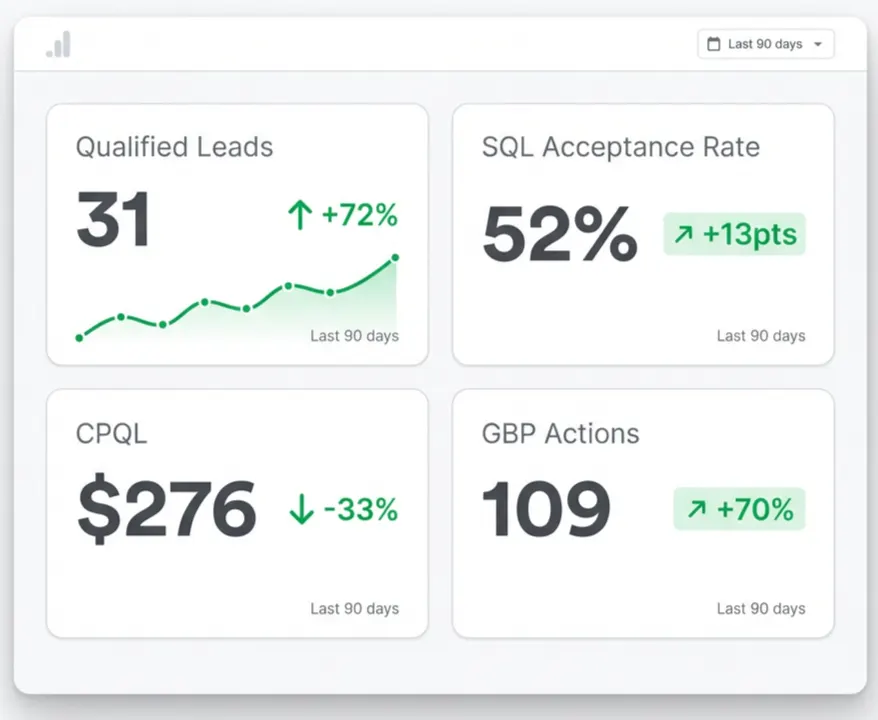
One SaaS product went from 18% to 42% activation once we took the friction out of its signup flow. The same discipline turns an agent site visitor into a valuation request. See how we find and fix the path to conversion.
Real estate website questions, answered
How much does a real estate agent website cost?
Across the market, custom real estate websites typically run $3,000 to $30,000 or more, driven mostly by whether listings need integrating and how much genuine neighborhood content is included. Our starter builds begin at $2,500 for a solo personal-brand site; most agents and teams competing on local search land in the $6,000 to $15,000 range. Ongoing content and local SEO is separate, from $1,500 a month.
Can my website outrank Zillow or Realtor.com?
Not for property searches, and any agency promising otherwise is not being straight with you. What you can win is the ground portals cover badly: neighborhood expertise, seller and valuation intent, market commentary, and searches for you by name or patch. That is also where the higher-value inquiries are, so it is the better fight anyway.
What do the best real estate agent websites do differently?
They stop trying to be a smaller portal. They keep the valuation path one tap away, write neighborhood pages with real substance rather than filler, serve buyers and sellers through separate funnels, and keep listing pages fast and crawlable rather than embedding a slow widget. Underneath, they carry complete schema so assistants can name them accurately.
Do you integrate IDX or MLS listings?
Yes, and how it is integrated matters more than whether. Most agent sites embed a third-party widget that adds seconds to load time and shows search engines nothing. We integrate feeds so listing pages stay fast and indexable, which is what makes them worth having at all.
Are neighborhood pages worth the effort?
They are the single best investment on most agent sites, but only if they say something real - schools, transport, price movement, what living there is genuinely like. Pages that repeat the area name across three paragraphs of filler will not rank and will not convince a seller you know the patch. We build fewer, better ones and expand from there.
How long does a real estate website take to build?
A solo starter site takes two to three weeks. A growth site with listing integration, neighborhood depth, and segmented funnels takes three to five weeks. Migrating substantial existing content and rankings adds time, because mapping redirects properly protects the traffic you already have.
Will our leads come to us or through the agency?
Directly to you, into whichever CRM you already run, with the source page attached so you know what earned the lead. We think any arrangement where inquiries flow through a vendor first is worth refusing, whoever builds the site.
Do you build for brokerages with many agents?
Yes. The main risks are agent pages that are near-identical templates and a listing structure that generates thin duplicate URLs. We design agent pages that can each rank for their own name and patch, and a listing architecture that scales without producing pages Google discounts.
Ready to build your next product?
Tell us what you're building. A senior engineer will help you scope it, plan it, and get it built fast, on a foundation that's ready for real users.